Why Mail-In Qualification Works
AWS D1.1 does not require the CWI to witness the welding. The standard requires only that the test be performed under a qualified Welding Procedure Specification and that the results be evaluated by an AWS Certified Welding Inspector. The welder's skill is demonstrated in the plate — not in front of an audience.
This means a fabrication shop in Texas, a structural contractor in Washington, or a pipe welder in Maine can qualify their crew without taking them off the job, booking a testing facility, or paying travel expenses. Ship the plate, get the WPQ. That's the whole model.
No Travel or Facility Scheduling
Your welder stays at your facility. No scheduling around a testing center's calendar, no travel time, no per diem. The test happens when your shop is ready — not when a facility has an opening.
Weld on Your Own Equipment
The welder uses the same machine, consumables, and setup they use every day. No adjustment period on unfamiliar equipment. The test reflects actual production capability, not performance on a stranger's machine.
Qualify Multiple Welders at Once
A testing facility handles one welder at a time on a fixed schedule. With mail-in qualification, your whole crew can weld their test plates the same week and ship together. One coordination call. One batch.
Full D1.1 Compliance
The mail-in process produces the same CWI-signed WPQ as any in-person testing facility. AWS CWI inspection, accredited laboratory bend testing, official documentation. Every item a project QC manager, auditor, or owner requires.
The Seven Steps — Start to WPQ
-
Call First — Get Your Prep Instructions
Before your welder runs a single bead, call us at (404) 860-1288. This call prevents the most common and most expensive mistake in the qualification process: welding the plate with the wrong setup.
We'll confirm all of the following before you prep anything:
- Correct plate thickness for the qualification range you need (3/8" limited vs. 1" unlimited)
- Test position and number of plates required (3G/4G requires two plates)
- Backing bar dimensions and root opening specification
- Testing method — bend tests vs. RT — and any project-specific requirements
- WPS provided or confirmed before welding
- Shipping address and Test Request Form provided after quote acceptance
Getting this right before welding takes 10 minutes. Getting it wrong means a re-weld, a re-ship, and a delay that could have been completely avoided.
-
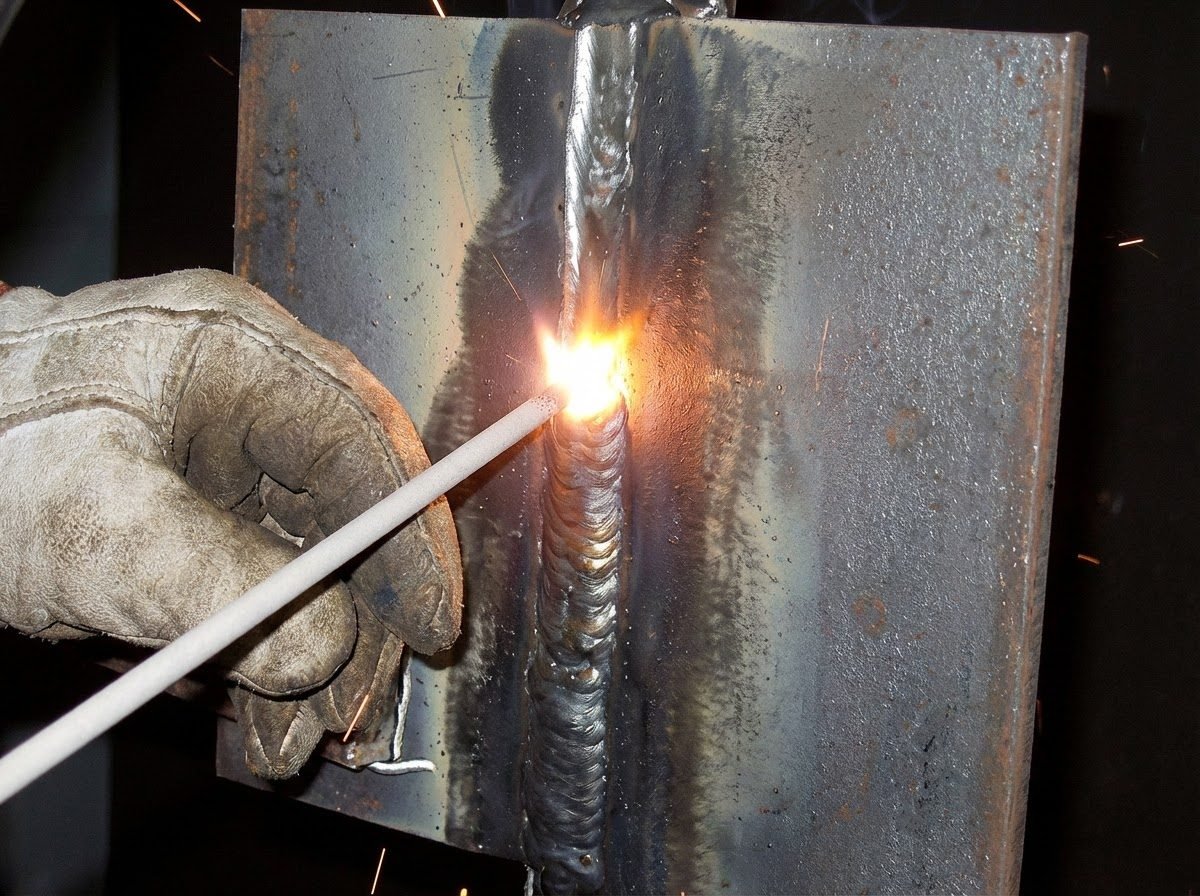
Welder Runs the Test Plate at Your Facility
The welder performs the CJP groove weld in the required position per the WPS — at your shop, on your equipment, on your schedule. This is a structural welding test, not a practice run. The WPS must be at the machine and followed exactly.
Standard plate test configuration:
- 45° included groove angle (22.5° per plate side)
- Knife-edge root face (0" land)
- 1/4" root opening
- 1/4" × 1" × 8" A36 permanent backing bar
- 1" ASTM A36 plate for unlimited thickness qualification
For pipe coupons (5G/6G): The pipe is positioned per the position designation — horizontal fixed for 5G, 45° inclined for 6G. Pipe does not rotate during welding. The welder moves around the full circumference.
For 3G/4G combined: Two plates — one welded in vertical position, one in overhead. Both ship together. Both must pass.
-
Plate Prep and Documentation
After welding, before packaging:
- Cool to ambient temperature completely — no quenching, no water cooling, no accelerated cooling of any kind
- No coatings, oils, or rust preventatives on the weld surface or adjacent base metal — these interfere with visual inspection and bend test specimens
- Mark the plate permanently — welder's full name, date of weld, process, test position, and plate thickness using metal stamp, paint marker, or engraving. Not tape. Not paper labels.
- Complete the Test Request Form — provided after quote acceptance. Fill it out completely. Missing fields cause delays at receipt.
- Include a copy of the WPS — the same WPS used for welding. Seal it with the Test Request Form in a clear plastic zip-lock bag.
Full packaging and labeling details are on the shipping instructions page.
-
Ship to Atlanta
Use the exact shipping address provided after quote acceptance — it is not posted publicly. Wrap each plate individually in bubble wrap or foam. Use a rigid double-wall cardboard box or wooden crate for multiple plates. Plates must not shift or contact each other in transit.
- UPS or FedEx for single plates and small batches up to 150 lbs
- Freight or LTL for heavy crated shipments
- Get a tracking number — always — and send it to us before or at time of shipment
- Consider shipping insurance for multi-welder submissions
We confirm receipt the day the plate is delivered. Plates with tracking numbers on file move into the inspection queue immediately on arrival. See the full shipping instructions for complete packaging requirements.
-
CWI Visual Inspection
Every plate is examined by our AWS Certified Welding Inspector per D1.1 Clause 4.9 before anything else. Visual inspection happens within 1 to 2 business days of receipt. No plate moves to mechanical testing without passing visual first.
Visual acceptance criteria — D1.1 Clause 4.9:
CracksNone permitted — anywhereIncomplete FusionNone permittedUndercut≤ 1/32" (0.8mm)Weld Reinforcement≤ 3/16" (4.8mm)Arc StrikesNone outside weld zoneOverlap / Cold LapNone permittedIf the plate fails visual inspection, we notify you the same day with the specific rejection reason. The welder re-welds a fresh plate. We do not proceed to bend testing on a visually rejected plate — no point running tests on a plate that won't pass.
-
Mechanical Testing — Bend Tests or RT
Plates passing visual proceed to accredited mechanical testing. For most D1.1 structural qualification, guided bend testing is the standard method. Radiographic testing (RT) is an accepted alternative when specified.
Guided bend testing — standard method:
- Backing bar removed before specimen cutting
- Four specimens cut per plate (2 face bends, 2 root bends)
- Each specimen machined to dimension per D1.1
- 180-degree bend in guided jig per D1.1 Figure 4.12
- Acceptance: no single discontinuity > 1/8" in any direction
- All four specimens must pass — one failure = plate fails
- Turnaround: 2 to 5 business days after visual pass
Radiographic testing — alternative method:
- X-ray evaluation of weld soundness without destructive testing
- Accepted for SMAW, FCAW, GTAW, and GMAW spray transfer
- Not permitted for GMAW short-circuit (GMAW-S) — bends required
- Turnaround: 3 to 7 business days (lab scheduling dependent)
- Must be specified on the Test Request Form before shipping
-
WPQ Issued and Delivered
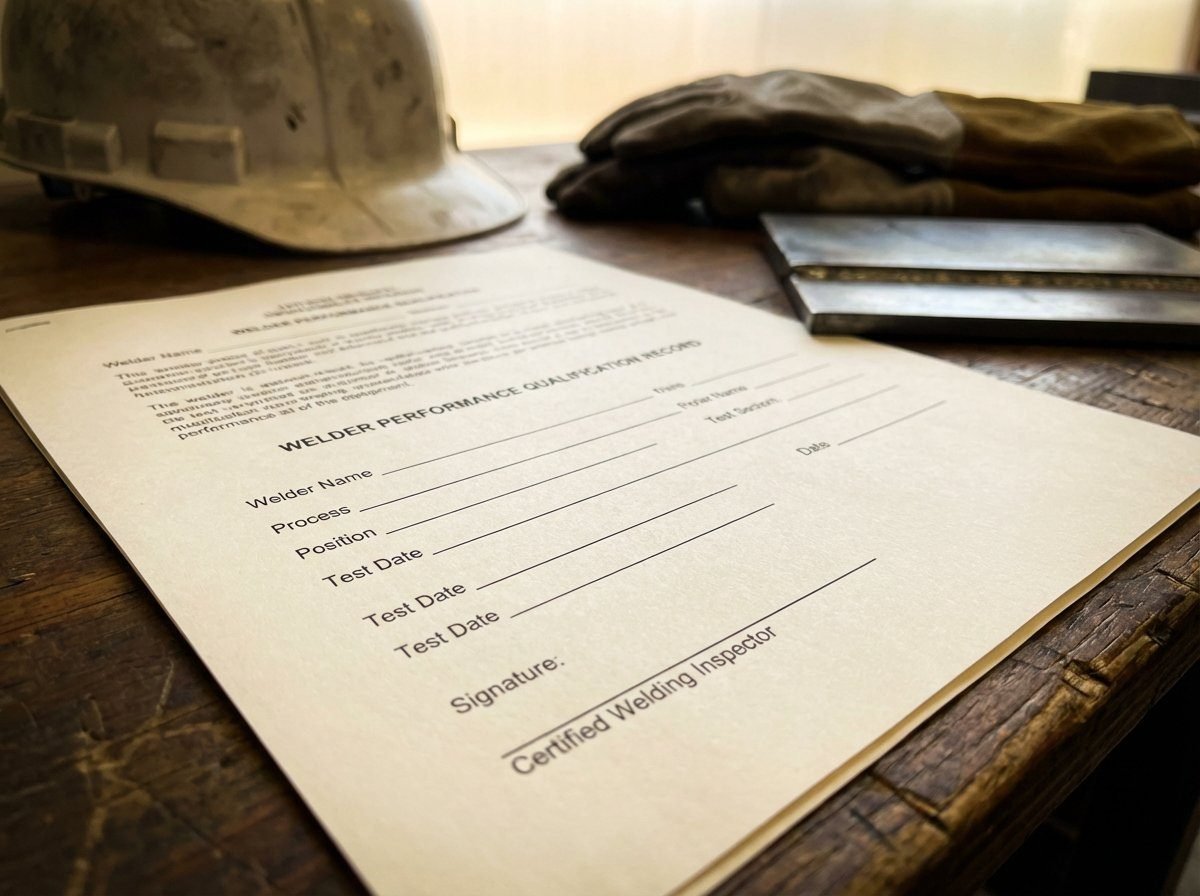
Visual passed. All bend specimens passed. The CWI reviews all test results, signs the Welder Performance Qualification record, and issues the official WPQ documentation.
The WPQ record includes:
- Welder's full name and employer
- Welding process qualified (SMAW, FCAW, GMAW, GTAW)
- Test position and positions covered per D1.1 Table 6.10
- Plate or pipe thickness and qualification range
- Date of test weld
- AWS CWI name, certification number, and signature
- Visual inspection results and bend test results
Delivery: WPQ emailed the same day testing is complete. Physical copy mailed — arrives 2 to 5 business days after email. Both formats provided as standard.
What to do immediately on receipt: Start the continuity log that same day. The 6-month continuity clock runs from the date of the test weld. Document the first production weld on the qualified process as soon as it happens and keep the log current from that point forward.
What Tests Are Available
| Test | Type | Groove Positions Covered | Fillet Covered | Plates |
|---|---|---|---|---|
| 1G Flat | Plate | 1G | 1F, 2F | 1 |
| 2G Horizontal | Plate | 1G, 2G | 1F, 2F | 1 |
| 3G Vertical | Plate | 1G, 2G, 3G | 1F, 2F, 3F | 1 |
| 4G Overhead | Plate | 1G, 4G | 1F, 4F | 1 |
| 3G/4G All-Position | Plate | All 4 positions | All 4 positions | 2 |
| 5G Pipe | Pipe | 1G, 3G, 4G | 1F, 3F, 4F | 1 coupon |
| 6G Pipe | Pipe | All positions | All positions | 1 coupon |
| Re-Certification | Any | Same as initial test | Same as initial | Per test |
After the WPQ — Maintaining Your Qualification
The WPQ is not a one-time document that lasts forever on its own. Per AWS D1.1 Clause 4.25, the qualification remains valid only as long as the welder uses the qualified process at least once every six months and the employer documents it in a continuity log.
- File the WPQ record immediately — physical and digital copies
- Start continuity log on the day of WPQ receipt
- Document first production weld on qualified process as soon as it occurs
- Set a 5-month calendar reminder for each welder's continuity window
- Review all welder logs quarterly — catch gaps before they become lapses
- Track each process separately — SMAW and FCAW continuity are independent
Frequently Asked Questions
Does AWS D1.1 allow mail-in welder qualification?
Why do I need to call before welding the plate?
What happens if my plate fails visual inspection?
What is the difference between bend testing and RT?
Can I qualify multiple welders at the same time?
Does the process page also cover pipe qualification (5G/6G)?
How long does the full process take?
When does the 6-month continuity clock start?
Is the mail-in WPQ accepted the same as an in-person qualification?
Ready to Qualify Your Welders?
Call before you weld. We'll make sure everything is set up right before your welder runs the plate.
Mail-in. CWI inspected. Accredited testing. Official WPQ. Nationwide.