AWWA Welder Qualification Testing — Water Main & Steel Pipe
Mail-in AWWA welder qualification for water main contractors, municipal utilities, and water infrastructure fabricators. Your welder runs the coupon at your facility under an approved WPS. Ship it to Alpharetta, GA. We handle CWI inspection, accredited bend testing, and official WPQ documentation.
✓ We Test Your Coupons • ✗ We Are Not a Welding School • ✓ Official AWWA WPQ Records Issued
Reviewed by: Timothy Dodd, AWS CWI #00120381 · ICC S2 Structural Welding Inspector
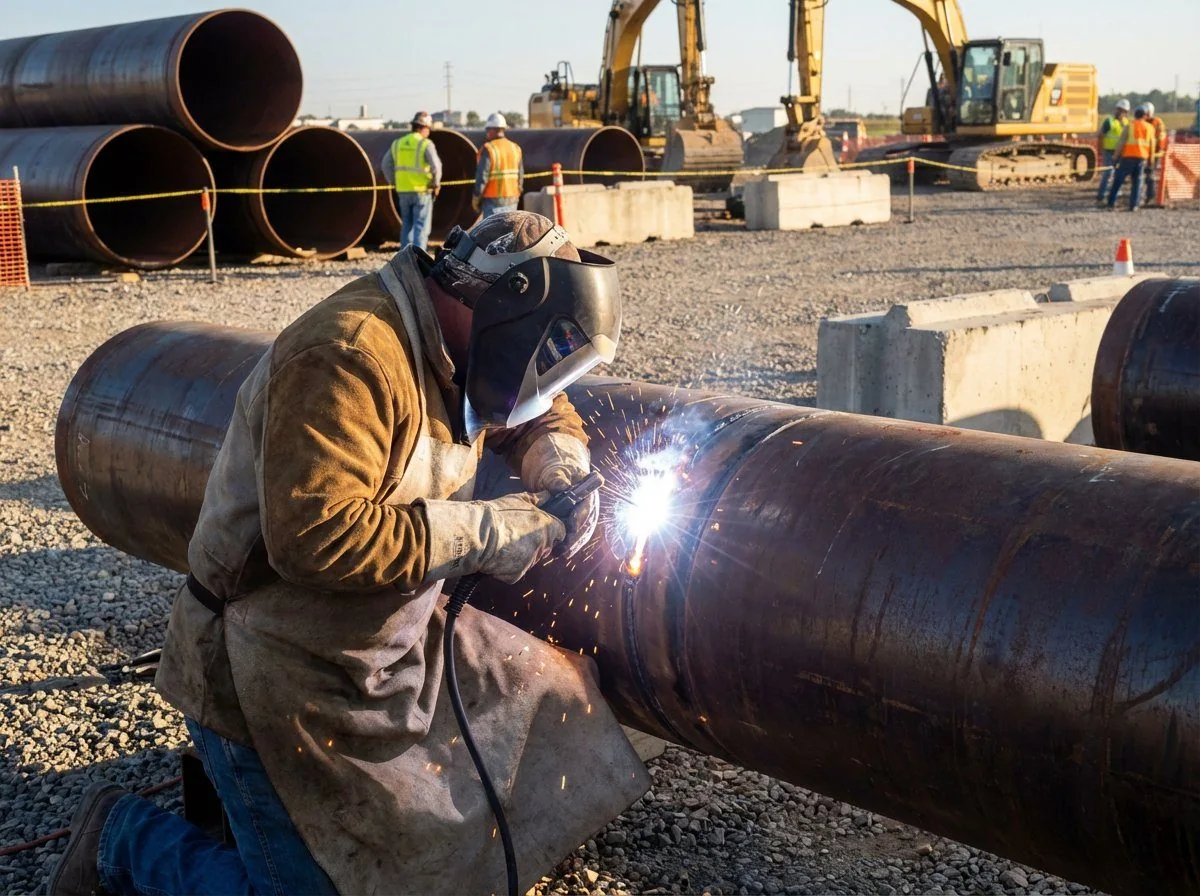
What Is AWWA and Who Needs This Qualification?
AWWA C206, Standard for Field Welding of Steel Water Pipe, is the governing welding standard for field welding of steel water pipe in municipal and water utility infrastructure. Published by the American Water Works Association, it covers butt joints, lap joints, and butt-strap joints on steel water pipe manufactured to AWWA C200 — primarily ASTM A36 and A572 Grade 50 carbon steel ranging from 6 inch to 144+ inch diameter. C206 explicitly incorporates AWS D1.1 by reference for welder qualification procedures, but when C206 and D1.1 conflict, C206 governs. Current edition: ANSI/AWWA C206-23 (2023), which superseded the 2017 edition. The standard does not cover stainless steel water pipe, pressurized industrial process water (ASME B31), or oil and gas pipelines (API 1104). A current AWS D1.1 WPQ often satisfies AWWA C206 requirements, but the project specification controls — many utility owners and state drinking water programs require AWWA-specific WPQ documentation. WeldCertTest performs all CWI inspection in Alpharetta, GA (Timothy Dodd, AWS CWI #00120381). The result is an AWWA C206 WPQ record — not an AWS Certified Welder card, which is a different program.
The American Water Works Association (AWWA) is the standard-setting body for the water supply industry. AWWA C206, Standard for Field Welding of Steel Water Pipe, governs the welding of steel water pipe joints in the field — butt joints between pipe sections, branch connections, and appurtenance attachments on potable water, raw water, and reclaimed water transmission and distribution systems.
Any welder performing production welds on steel water pipe projects specified to AWWA C206 must hold a current qualification. This applies to:
- Water main construction contractors welding steel pipe joints in the field
- Municipal utility crews maintaining and repairing steel water transmission mains
- Fabricators welding steel water pipe fittings, outlets, and appurtenances
- Contractors working on large-diameter steel water transmission lines
- Repair welders patching or modifying existing steel water infrastructure
- Contractors on projects where the engineer specifies AWWA C206 compliance
AWWA C206 — What the Standard Actually Covers
AWWA C206 is a field welding standard — it governs the joining of steel water pipe sections on the job site, not shop fabrication. It addresses three primary circumferential joint types — butt joints, lap joints, and butt-strap joints — plus the welding required for installation of specials and appurtenances:
Butt Joints
The primary joint type — welding two pipe sections end to end. Coverage includes joint preparation, fit-up requirements, and multi-pass welding sequences for various wall thicknesses.
Lap Joints
Fillet welds joining overlapping pipe sections. Common in certain distribution main configurations. Welder qualification for lap joints requires fillet weld test coupons in addition to groove weld qualification.
Butt-Strap Joints
A circumferential strap of steel placed over the joint between two pipe ends and fillet-welded to both. Common where pipe ends cannot be brought into the precise fit-up required for a butt weld — long closure pieces, tie-ins, and field correction situations.
Branch Connections
Welding tees, outlets, and service saddles to the main pipe. Requires qualification for the joint geometry and position encountered in the field — often overhead or in-ditch orientations.
Repair Welds
Patching pits, corrosion damage, or mechanical damage on existing pipe. Often performed in confined trench conditions requiring all-position capability. Qualification must cover the positions used in production repair work.
AWWA C206 vs. AWS D1.1 — Side by Side
| Factor | AWWA C206 | AWS D1.1 |
|---|---|---|
| Governing Body | American Water Works Association | American Welding Society |
| Application | Steel water pipe — field welding | Structural steel fabrication |
| Qualification Procedure | Incorporates AWS D1.1 by reference | Self-contained |
| D1.1 Qual Accepted? | Often yes — verify with engineer | N/A |
| Base Material | Carbon steel water pipe (AWWA C200) | Structural carbon & low-alloy steel |
| Plate Test Covers Pipe? | Per D1.1 rules incorporated by ref. | Partially |
| Regulatory Oversight | State drinking water programs, EPA | Building / bridge codes |
| WPQ Required? | Yes | Yes |
Welder Qualification Under AWWA C206
AWWA C206 welder qualification follows the same position coverage logic as AWS D1.1. Qualifying in a more demanding position covers easier positions. Here is the position hierarchy for water main work:
| Test Position | Designation | Positions Covered | Field Application |
|---|---|---|---|
| Flat | 1G / 1F | Flat only | Shop fab on rotator |
| Horizontal | 2G / 2F | Flat + Horizontal | Limited field use |
| Vertical | 3G / 3F | Flat + Horiz + Vertical | In-trench vertical joints |
| Overhead | 4G / 4F | Flat + Horiz + Overhead | Below-grade work |
| 3G + 4G Combined | 3G/4G | All plate positions | Full plate coverage |
| Fixed Pipe — Horiz. | 5G | All pipe positions | In-trench pipe butt joints |
| Fixed Pipe — 45° | 6G | All positions — pipe & plate | Broadest field coverage |
Steel Water Pipe Materials — What You're Welding
AWWA C206 covers field welding of steel water pipe manufactured to AWWA C200, Steel Water Pipe, 6 In. and Larger. Common base materials include:
- ASTM A36 — The workhorse carbon steel, 36 ksi yield. Common in smaller diameter water pipe and fittings. Excellent weldability, no preheat required for most thicknesses.
- ASTM A572 Grade 50 — Higher strength carbon steel, 50 ksi yield. Used in larger diameter, higher pressure transmission mains where thinner wall is preferred. Still excellent weldability.
- ASTM A516 Grade 70 — Pressure vessel quality plate used in some fittings and special sections. Very good weldability, common in shop-fabricated components.
- ASTM A139 — Electric-fusion welded steel pipe, commonly used in water transmission. Field joints on A139 pipe are welded per AWWA C206.
Common Welding Processes for AWWA Water Main Work
AWWA C206 recognizes the same welding processes as AWS D1.1. Field water main welding is dominated by:
Dominant process for field water main welding. E6010 root pass, E7018 fill and cap is the standard combination. SMAW is rugged, tolerant of field conditions, and works in wind and moisture where wire processes struggle.
Self-shielded FCAW (E71T-8) is used in some field water main applications where deposition rate matters on heavy wall pipe. Must be shielded from wind. Less common in trench work than SMAW.
Used in shop fabrication of fittings and specials. Not typically used in the field for water main work due to wind sensitivity. Shop qualification for GMAW applies to fabricated fitting work.
Occasionally used for root passes on thinner wall pipe or precision fittings in shop environments. TIG produces excellent root quality but is slow — not common for large diameter field joints.
Preheat Requirements for Steel Water Pipe
Preheat prevents hydrogen cracking and is required by AWWA C206 for certain combinations of pipe thickness, carbon equivalent, and ambient temperature. Key preheat rules for common water pipe materials:
| Wall Thickness | Material | Min. Preheat | Notes |
|---|---|---|---|
| Under ¾ inch | A36, A572 Gr. 50 | None required above 32°F | Standard field conditions — no preheat if ambient above freezing |
| ¾ inch to 1½ inch | A36, A572 Gr. 50 | 50°F minimum | Light preheat — propane torch sufficient for most work |
| Over 1½ inch | A36, A572 Gr. 50 | 150°F minimum | Heavy wall transmission pipe — verify with WPS |
| Any thickness | All | 32°F minimum | No welding on frozen or frost-covered base metal |
How WeldCertTest Qualifies Your AWWA Welders
- Contact us for a quote — Tell us your pipe OD, wall thickness, welding process, and test positions needed. We confirm requirements and provide shipping instructions.
- Weld your test coupon — Your welder produces the coupon at your facility per your approved WPS. Mark it with welder ID, date, position, and process.
- Ship to Alpharetta — Package per our shipping guide and send via any carrier. Pipe coupons need proper crating to arrive undamaged.
- CWI visual inspection — Our Certified Welding Inspector performs visual examination per AWWA C206 / AWS D1.1 criteria. Cracks, porosity, undercut, and profile are all evaluated.
- Guided bend testing — Root and face bend specimens are cut and bent in our accredited bend fixture. No cracks or defects exceeding 1/8 inch allowed.
- WPQ issued — Passing coupons receive a signed WPQ documenting all essential variables and test results. Your official qualification record.
Regulatory Framework — Who Enforces AWWA Welding Standards
Water infrastructure welding compliance flows through multiple layers of oversight. Understanding who is watching and what they require prevents costly field rejections.
EPA — Safe Drinking Water Act
The Safe Drinking Water Act sets the framework for drinking water quality and infrastructure standards. EPA delegates primary enforcement to state drinking water programs which then impose contractor and material requirements on water main projects.
State Drinking Water Programs
Each state operates a primacy program under EPA authority. State programs review construction plans, approve materials, and inspect water main projects. Many states reference AWWA standards in their construction regulations and require AWWA-qualified welders on steel water main projects.
Municipal Utility Owners
Water utility owners — cities, counties, water districts — specify construction standards in their project documents. Most large utilities reference AWWA C206 for steel pipe welding. The owner's engineer reviews qualification records before work begins and the inspector verifies compliance in the field.
Project Engineer of Record
The licensed engineer who designed the water main project is responsible for specifying applicable standards. The spec they write controls what qualification documentation is required. When the spec says AWWA C206 welders — that's the standard. Get the documentation that matches what the spec requires.
Which AWWA C206 Edition Applies — And the AWS D1.1 Reference Chain
AWWA C206 is revised on an approximately 6-year cycle. The current edition is ANSI/AWWA C206-23 (2023), which superseded the 2017 edition. Earlier editions (2011, 2003, 1997, and back to the original 1946 joint AWWA-AWS standard) are historical. Because AWWA C206 explicitly incorporates AWS D1.1 by reference for welder qualification procedures, edition changes in D1.1 flow through to C206 practice.
AWS D1.1 Continuity Citation — How It Applies to AWWA Work
The AWS D1.1 welder continuity rule (the 6-month rule) is governed by D1.1 Clause 6.4.1 in both the current D1.1:2025 edition and the prior D1.1:2020 edition. Because AWWA C206 incorporates AWS D1.1 by reference for welder qualification procedures, the same continuity rule flows through to AWWA C206 work. A welder qualified under AWWA C206 must use the qualified process at least once every six months, with employer documentation, or the qualification expires and re-qualification is required. AWWA C206 WPQs that cite earlier D1.1 editions remain valid — the substantive 6-month rule has not changed.
AWWA C206 vs. ASME B31 vs. API 1104 — When Each Applies
Water-carrying steel pipe isn't always under AWWA jurisdiction. The water carries through multiple regulatory contexts depending on what kind of water, what pressure, and what utility or industry owns the system. Picking the wrong code is a field rejection waiting to happen.
| Water Service / Application | Welding Code That Applies | Typical Pipe Size |
|---|---|---|
| Municipal potable water transmission & distribution | AWWA C206 | 6"–144"+ OD |
| Municipal raw water (utility-owned, low pressure) | AWWA C206 | 12"–96"+ OD |
| Reclaimed water / reuse systems (utility) | AWWA C206 | 6"–60" OD |
| Water treatment plant process piping (utility-owned) | AWWA C206 (typical) / ASME B31 if specified | 4"–48" OD |
| Fire suppression mains (AWWA jurisdiction) | AWWA C206 (or NFPA-referenced) | 6"–24" OD |
| Pressurized industrial process water (refinery, plant) | ASME B31.3 + Section IX | Varies |
| Boiler feedwater & high-pressure water (power plant) | ASME B31.1 + Section IX | 2"–24" OD |
| Hot/cooling water in HVAC mechanical piping | ASME B31.9 + Section IX | 2"–24" OD |
| Water pipeline transmission under PHMSA jurisdiction | API 1104 (49 CFR 195 applies in rare water cases) | Varies |
| Stainless steel water pipe (any application) | AWS D1.6 / ASME if pressure-rated | Varies |
Real-World AWWA Production Welding Scenarios
The codes and tables above describe the regulatory framework. Below are the concrete production scenarios where AWWA C206 qualification is the working credential — what utility projects actually look like on the ground.
Large-Diameter Transmission Mains
Regional water system transmission lines (typically 36" to 144"+ OD) connecting reservoirs, treatment plants, and major distribution nodes. Heavy wall pipe, butt welds joined section by section across long right-of-way distances. The largest single AWWA C206 production scenario for steel pipe work.
Municipal Distribution Network
City and county water distribution mains (typically 6" to 24" OD) carrying treated water from transmission to service connections. Steel pipe used for higher-pressure mains, river crossings, and locations where ductile iron isn't appropriate. AWWA C206 governs the field welding for these projects.
Water Treatment Plant Piping
Raw water intake piping, process piping between treatment stages, and finished water piping out to the transmission system. Field welding of yard piping and connecting pipe falls under AWWA C206 when the utility specifies C206 governance; some facilities run under ASME B31 instead — verify with the spec.
Reservoir & Tank Piping Connections
Inlet, outlet, drain, and overflow piping at storage reservoirs and elevated tanks. Includes vault connections, butterfly valve installations, and the steel pipe transitions between buried mains and exposed piping at the tank base. All-position field welding capability is essential for in-vault work.
Butt-Strap Joint Closures
Butt-strap joints — a specifically AWWA C206 joint type — are used at field closures where butt-weld fit-up isn't achievable. Long pipe section closures, tie-ins to existing infrastructure, and field correction situations where the gap or alignment is too large for a butt weld. AWWA C206 qualification covers this joint type when fillet weld testing is included.
Field Repair & Modification
Patching corrosion damage, mechanical damage, and seam repairs on existing steel water infrastructure. Saddle welds for service connections on existing mains. In-trench, often in confined and awkward positions. The 3G/4G plate or 5G/6G pipe positions are typically required for repair welder qualification under AWWA C206.
AWWA Welder Qualification — Frequently Asked Questions
Does AWWA allow mail-in welder qualification testing?
Which AWWA standard covers welder qualification for water mains?
How is AWWA C206 welder qualification different from AWS D1.1?
Do water main welders need a separate qualification for AWWA work?
What pipe sizes and positions are covered by AWWA welder qualification?
What materials are covered under AWWA C206 welder qualification?
How long is an AWWA welder qualification valid?
Can an AWS D1.1 qualified welder work on AWWA water main projects?
What documentation is issued after passing AWWA welder qualification?
What is the difference between AWWA C200 and AWWA C206?
What edition of AWWA C206 is currently in effect?
Does an AWS D1.1 qualification automatically satisfy AWWA C206 requirements?
What types of water infrastructure production welding actually require AWWA C206 qualification?
Does an AWWA C206 qualification produce a WPQ record or an AWS Certified Welder card?
AWWA Water Works Welding — Key Terms
- AWWA C206
- Standard for Field Welding of Steel Water Pipe, published by the American Water Works Association. Governs field welding of steel water pipe joints for potable water, raw water, and reclaimed water systems.
- AWWA C200
- Steel Water Pipe, 6 In. and Larger — the manufacturing standard for steel water pipe. Defines material, dimensions, fabrication, and testing requirements for the pipe itself. C206 governs field welding of pipe manufactured to C200.
- WPQ (Welder Performance Qualification)
- Official record documenting that a welder has passed a qualification test under a specific welding procedure. Required by AWWA C206 and presented to project owners, inspectors, and state programs as proof of qualification.
- Carbon Equivalent (CE)
- A calculated value representing the hardenability of a steel based on its chemistry. Higher carbon equivalent means higher preheat requirements to prevent hydrogen cracking. AWWA C206 and AWS D1.1 both use carbon equivalent to determine preheat.
- Butt Joint
- A weld joint in which the pipe sections are placed end to end and welded at the abutting edges. The primary joint type for water main pipe installation. Typically a complete joint penetration groove weld.
- Lap Joint
- A weld joint in which one pipe section overlaps another and is joined by fillet welds on the overlapping edges. Used in certain water distribution configurations. Requires fillet weld test qualification separate from groove weld qualification.
- Primacy State
- A state that has received EPA authorization to administer the Safe Drinking Water Act within its borders. Primacy states set their own construction standards for water systems — many reference AWWA standards — and conduct their own inspections and enforcement.
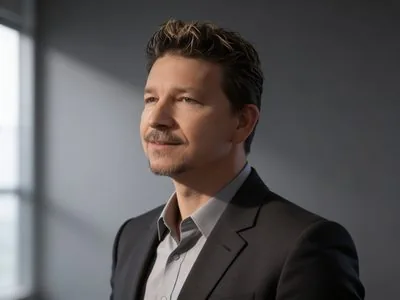
The People Behind the Inspection
Every AWWA C206 coupon submitted to WeldCertTest is inspected by a named, currently-certified AWS CWI. When the utility owner or state drinking water program asks who signed your WPQ, you have an answer.

Ready to Qualify Your Water Main Welders?
Mail your test coupon. We handle CWI inspection, accredited bend testing, and issue the official AWWA WPQ. Water main contractors nationwide trust WeldCertTest.
Content reviewed by Timothy Dodd, AWS CWI #00120381 · Last reviewed May 16, 2026